Monday, June 8, 2020

Odd fishes and Plankton

Odd fishes and Plankton


Plankton are microscopic organisms that form the base of the ocean, lake, and river food chains.  There are two big categories: Phytoplankton which are the photosynthetic things, and the zooplankton, which are the things that eat the light using phytoplankton.   I started drawing a few interesting types of zooplankton, and they are now in the pile (awaiting spoonflower push, but in cafepress, etc.):

  • Two copepods so far.  Copepods are crustaceans related distantly to shrimp. 
  • Another odd crustacean: Cystisoma Hyperiid
    • Giant eyes and looks more like a cross between a fly and a shrimp
  • A microscopic deep worm: Tomopteris Polychaete
  • A sea slug we saw on a research trip to Panama City Beach a decade ago: a Nudibranch  
  • More will follow
Also added a fish that I like to catch in the Mississippi river on a fly rod: the Skipjack (Shad) Herring. Jumps like a tarpon, and is food for many large predatory fish.

Also will be adding more European saltwater fishes, and did add the John Dory (Zeus, St. Peters) Fish. It is definitely a time consuming draw, but worth it. 

Tight lines, calm seas, and be careful with your eyepieces!

Bryce

Thursday, May 21, 2020

Suggested adds and some others

Suggested adds and some others


As I noted before I do take suggestions, and draw them up when I get a chance (i.e. night, weekends, off days, or really boring meetings...)

Added the Clown Knifefish (Featherback) which is native to SE Asia, but is loose in south Florida Canals (wanted to catch one on the fly for a while, seen some near Miami).

Also by request added the Ram (Butterfly) Cichlid, which took a while due to deep details.

Also added a common turtle that is in the wild  around the Midwest (if you see these, lots of fish are also nearby) and also a common pet: Map Turtles, and the colorful Florida Cooter Turtle.

All in Spoonflower in a few weeks, but in Cafepress now.

More as I think of them....

Tight lines and Fair Seas, 
Bryce

Thursday, May 14, 2020

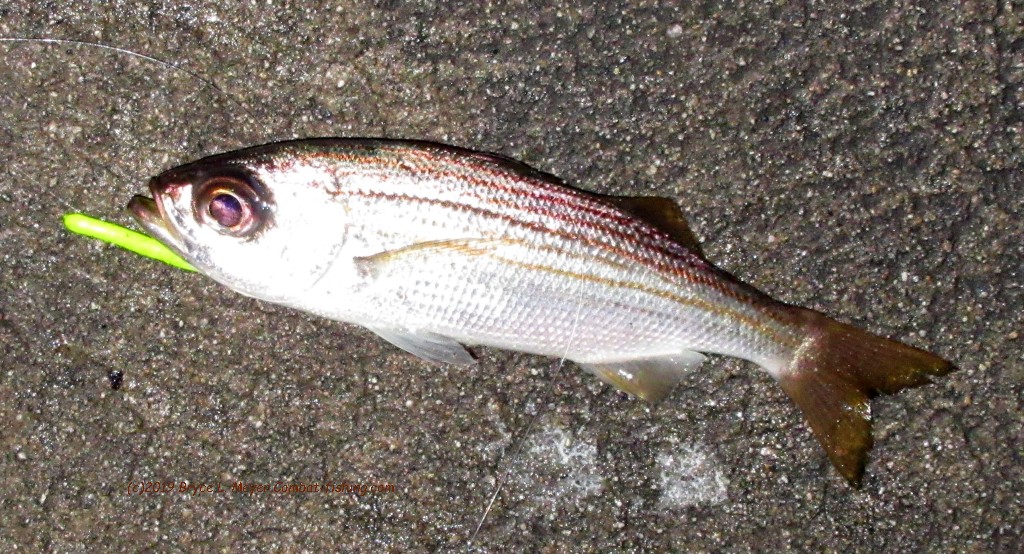
Cute little ignored fishy: Salema

The Salema grunt(Xenistius californiensis)

(for a real picture: http://www.combat-fishing.com/Salema1BelomntShoresPierPacificOceanCA06Nov2019wra.jpg )

In addition to my continuing shark updates for the deep sea sharks (updated the frilled shark...what an odd beastie to be sure! and added the smoothhound shark too, and fixed the sixgill shark and sevengill shark) I added a cute little fish that one sees when fishing light under the lights of SoCal bay piers (Belmont Veterans pier is a perfect example) : the Salema (grunt) (Xenistius californiensis). It is a yellow-orange striped fish that looks like a white bass, yellow bass (which is of the same size range too) or baby striped bass that got dipped in colorful paints.  Like many cases in nature its looks are due to convergent evolution, i.e. even though the Salema is a grunt, and the yellow bass is a temperate bass, they are both schooling fish that eat small invertebrates and small fishes.  Not to be confused with the Mediterranean Salema (a porgy, that looks like a pinfish which is also a porgy). Interesting ly enough, you could theoretically catch the deep sea sharks mentioned above and the little Salema on the same pier, but likely not on the same tackle!

Tight lines and calm seas,
Bryce

Thursday, April 16, 2020

Slow Revisions and Updates

Slow Revisions and Updates


As time allows and the mood strikes me, I have been redrawing some older designs to make them more biologically accurate. Many older designs from 2015 or before are a little cartoonish, and have giant splashy signatures. The new designs are still signed (usually near bottom fin or tail) but not with crazy large font, and have far more detail in the design to reflect the beauty of the real animal. Last time updated the Bull Shark and added the Sand Tiger and Sandbar Sharks.

The latest set:
Great white shark, biting and swimming (yes, looks dangerous now, though the old version is still in the cafe press shop).
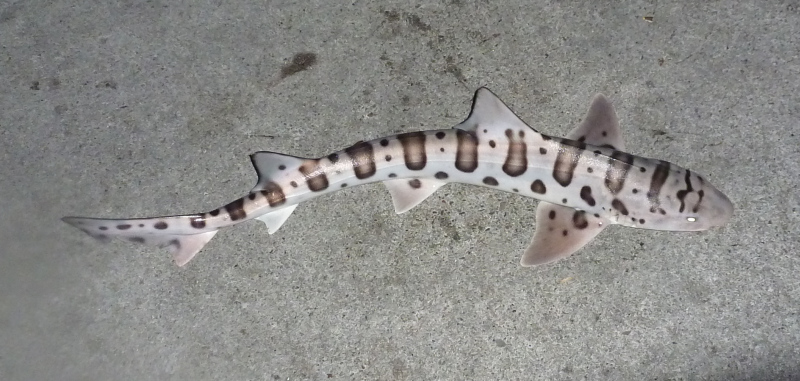
Leopard shark (this version is drawn from one I caught off Oyster Point Pier)
(Common) Thresher Shark (yes, the tail is that long...like a tadpole.  Seen them caught over the years and they are very powerful swimmers that jump.  There are legends of threshers chopping heads of fishermen. ).

They will show in spoonflower for your projects in the next couple of weeks (delays in getting cloth to review due to virus stuff). Will be available on furniture and decor at the same time, same site.

Stay Safe and Enjoy,
Bryce

Cafe press shops: start here for sharks: https://www.cafepress.com/combatfishingoffshorefish
Spoonflower: http://www.spoonflower.com/profiles/combatfish
Main Catalog: All the species I have http://www.combat-fishing.com/DesignFishCafeCatalog.html
Shopping Site for everything I do: http://www.combat-fishing.com/shoppingmain.htm
some designs also go here:
Design by Humans: https://www.designbyhumans.com/shop/CombatFish/

Tuesday, April 7, 2020

Making Masks from Spoonflower cloth

Making Masks from my Spoonflower cloth


Turns out many of my spoonflower fishy designs are perfect for making masks!

To test this I sewed up a couple last night from a sample set of test swatches (i.e. my artist samples with white boarders, your orders may not).
The test swatch size is good for one mask, though a yard can be used to make many.

I tagged the ones that are best for the purpose, though any of my designs with smaller items (i.e. 2" per item or less) work well.

For my mask, I used two 10" pieces of cord, half a twist tie from a coffee bag (the thick ones), and a section of test swatch of this pattern:
https://www.spoonflower.com/en/fabric/9575574-masu-salmon-cherry-trout-blues-by-combatfish

I made my wife's from this pattern, again 2 10" cord sections, and the twist tie:
https://www.spoonflower.com/en/fabric/9284464-flagtail-prochilodus-on-light-blue-by-combatfish

1) Fold over pattern, invert, then sew edges.
2) Invert to make pattern stick out, put twist tie in middle top and stitch in
3) stick in cords to make a loop (test on your face), then sew in and sew in edge.  Repeat for each edge. Make sure it fits snug!

There are patterns all over the web but I sort of winged it and it worked out I think:

Here is a list of a few other good ones:
https://www.spoonflower.com/en/fabric/9296308-sergeant-major-fish-on-light-blue-by-combatfish
https://www.spoonflower.com/en/fabric/4909964-silly-squid-blue-by-combatfish
https://www.spoonflower.com/en/fabric/9335962-70s-tuna-outlines-on-black-by-combatfish
https://www.spoonflower.com/en/fabric/9098964-shiners-doll-size-by-combatfish
https://www.spoonflower.com/en/fabric/4879695-14-trout-salmon-pattern-by-combatfish
https://www.spoonflower.com/en/fabric/4879870-6-simple-billfish-by-combatfish
https://www.spoonflower.com/en/fabric/4876620-27-sharks-by-combatfish
https://www.spoonflower.com/en/fabric/4909825-mahi-mahi-dolphinfish-pattern-by-combatfish
https://www.spoonflower.com/en/fabric/4887317-7-tuna-by-combatfish
https://www.spoonflower.com/en/fabric/4959559-7-sunfish-pattern-by-combatfish
https://www.spoonflower.com/en/fabric/9297066-wahoo-ono-on-light-blue-by-combatfish
https://www.spoonflower.com/en/fabric/8429831-cymbospondylus-sea-blue-by-combatfish
https://www.spoonflower.com/en/fabric/4879563-golden-trout-by-combatfish
https://www.spoonflower.com/en/fabric/9178776-mask-sized-atlantic-salmon-by-combatfish
https://www.spoonflower.com/en/fabric/8659300-red-crawfish-mudbug-on-black-by-combatfish
https://www.spoonflower.com/en/fabric/9296993-ozark-ringed-crayfish-on-blue-by-combatfish
https://www.spoonflower.com/en/fabric/9330045-3-deep-sea-jellyfish-on-dark-blue-by-combatfish

but I have a few hundred in my shop that will work.

Stay safe!
Bryce


Saturday, March 28, 2020

More odd fishes and cool stuff


Deep sea fish are often 'red' fish, in that they have red, orange, and purple coloration, since red is the first color to get stopped by water...at depth these fish are close to black, but on the surface or in the shallows a cool array of sunset colors. 

First I added two Cardinal fish...popular aquarium fish all over. 
The  Banggai cardinalfish is a popular aquarium fish but int he wild has a very limited range, on reefs around the Banggai Islands in Indonesia.  It is not red, but just interesting in general.
A relative is more orange, the Pajama or Spotted Cardinalfish (fyi, they don't look like the bird or the churchman, wonder if they are important in something?), which  has some orange on the fins.

A redder fish family is the Squirrelfish (big eyes = squirrel-like maybe?), which have scales and stripes, and are again a popular saltwater reef fish family.  Drew two common types: Squirrelfish of the Atlantic, and the Hawaiian Squirrelfish of the Pacific.  The Hawaiian model, like the Hawaiian shirt is a bit more colorful.

I also added the deep water Queen Snapper, a purplish-reddish-Atlantic fish caught in water from a few hundred to thousand feet deep.

The same fishes are on patterns and decor also at my Spoonflower site (or soon will be).

Tight lines, calm seas, and BE SAFE!

Bryce L. Meyer


Wednesday, March 11, 2020

Sharks and Sharks

Sharks and Sharks


I took a chance to clean up a few older drawings and then add a new one.
Over time, my skills have improved, and I can take the chance to make the fishes look more real, and show their natural beauty better.
The Atlantic Salmon (Salmo salar) was one.  The old drawing was rough and cartoon-like at best, but after redrawing this king of the rivers, I added many details, made the proportions work, added scales and deeper coloration, and met the short description.  For those unfamiliar with the fish, you likely ate it when you ate salmon at a restaurant or or bought it at a store as it is heavily farmed.  The wild fish are premier fly fishing targets, usually released, and inhabit legendary rivers such as the Skye, Ness, Spey, and at one time, the Thames. They are native to the North Atlantic, and spawn in rivers in North America and Europe. Landlocked fish are targets in New York, and some have colonized the Great Lakes. They are now found in the Southern Ocean in South America, New Zealand, Australia, and have gotten loose to a small degree in British Columbia.  They are related to Brown Trout (Salmo trutta) which look similar when in the sea.

The Bull Shark (Carcharhinus leucas)  really needed an update too. It first appeared in my book Audrey's Amazon Rivers, and then in Cafe Press and other spots.  My drawing was primitive and sported river colors. This shark can live in freshwater or saltwater, and is found worldwide in temperate and tropical waters, including far up the Amazon and Zambezi rivers, in lakes in Africa and Central America, and rarely in the Mississippi River up to Alton, Illinois.  The new drawing is more color accurate, meets the description, and has the details such as fin edge markings that make it realistic.

Then I added the Sand Tiger Shark (Carcharias taurus).  This is a very scary looking shark, but in reality is a fish eater, and is fairly benign to diver and swimmer alike, which is why many aquariums feature this fish. The teeth are snaggle-toothed, and a key feature is that this shark lives from the surf to continental shelf, worldwide.

In Spoonflower, look for my latest, mostly groupers and butterflyfish.
Look for the new sharks and salmon, and two new butterflyfish in a week.


Enjoy tight lines and fair seas!
Bryce